The best Apex team comps for Diamond and above this season are built around a single win condition the whole trio agrees on before the drop. Season 29 “Overclocked” pays placement heavily, so the comps that climb are the ones that reach the late ring informed and alive: an info-and-rotate core (Bloodhound, Conduit, Bangalore) for placement climbers, a defensive hold (Newcastle, Catalyst, Bangalore) for teams that want to lock a POI and force pushes, and a dive comp (Ash, Axle, a Recon) for stacks that can convert early kill RP into a mid-game lead. Pick one identity and commit – the worst comp is three legends with three different plans.
Below is the full breakdown of each archetype, the win condition it’s built on, who calls the shots, and how it actually performs in a Diamond+ ranked lobby rather than on an ALGS stage. We boost Apex trios through ranked splits constantly; these are the cores our boosters run when the job is “get this account to Master.”
What makes a comp work at Diamond+
Below Diamond, comp barely matters – comfort and clean fundamentals carry, and we covered the best solo-carry legends by class for exactly that climb. From Diamond up, the lobbies tighten, third parties are constant, and the difference between Master and hardstuck Diamond is whether your three legends cover three jobs:
- Information. A Recon legend (Bloodhound, Crypto, Seer) so you know where fights are before you walk into them. A comp without information gets third-partied to death and wonders why.
- Sustain or zone control. A Support (Conduit, Newcastle, Loba) or Controller (Bangalore, Catalyst) so you survive the fights you do take and own the closing rings.
- Reposition or pressure. A Skirmisher (Valkyrie, Axle) to escape a bad ring, or an Assault (Ash, Fuse) to force the fights you want on your terms.
The RP math is why this matters. Diamond costs 65 RP to enter a match and Master costs 90 (entry costs per pley.gg and apexranked.com), so a single bad game where you die 14th is a real RP loss. Reaching 5th is worth around 125 RP and a Top 2 clears 175+ before kills (placement values per pley.gg). A comp that reliably reaches the late ring is a comp that prints RP. A comp that dies mid-game on a coin-flip fight bleeds it.
The best Apex comps this season
Here are the three archetypes worth running at Diamond+, their core legends, the win condition each is built on, and who should be calling rotations. For the per-legend letter grades behind these picks, check the current Apex legend tier list.
| Comp | Core legends | Win condition | IGL (who calls) |
|---|---|---|---|
| Info & Rotate | Bloodhound, Conduit, Bangalore | Reach the late ring informed and alive; win the final-ring fight with smoke and info. | Recon player |
| Defensive Hold | Newcastle, Catalyst, Bangalore | Anchor a POI, force enemies to push into your zone of death. | Controller player |
| Dive / Aggro | Ash, Axle, Crypto | Bank early kill RP, then convert the lead into a strong mid-game position. | Recon/Crypto player |
| Balanced Flex | Bloodhound, Valkyrie, Conduit | Information plus a free reposition; flexible into any ring. | Recon player |
Info & Rotate: Bloodhound + Conduit + Bangalore
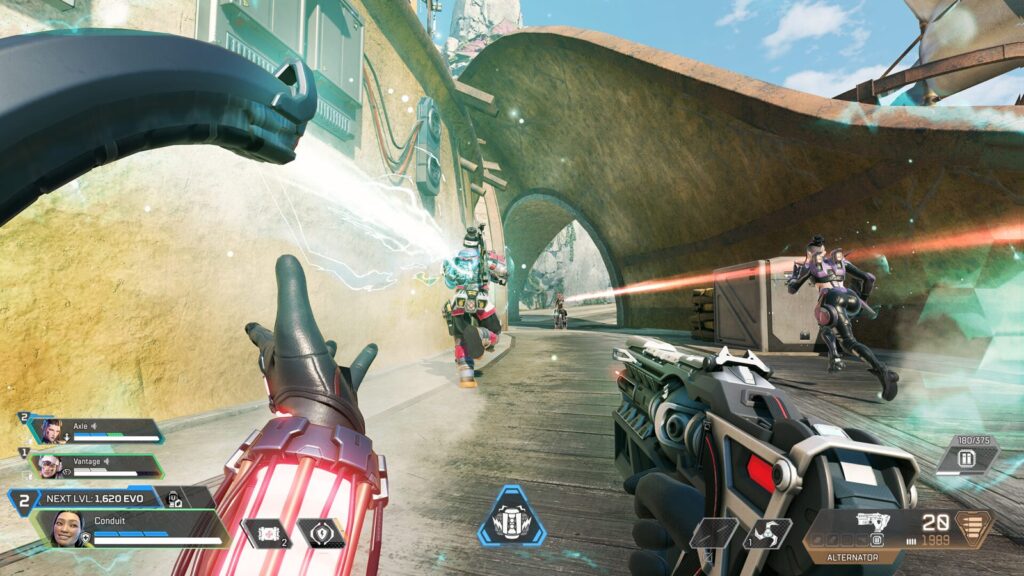
This is the comp we reach for first on a placement climb, and it’s the one most ranked trios should default to. The win condition is simple: get to the late ring with more information and more health than the squads you’re fighting, then use Bangalore’s smoke and Bloodhound’s scan to win the final-ring fight on your terms. Bloodhound clears buildings and flags third parties so you never walk blind into a fight. Conduit’s shield regen – she got Split Charge baked into her base kit this season (per Respawn’s notes) – turns lost fights into survived ones. Bangalore’s smokes are the best tool for both disengaging and cracking a defensive hold in the closing rings.
The Recon player is the IGL here. Whoever holds the information makes the rotation calls, and the other two follow. This comp sits on the strongest current pieces – Conduit posts around a 20% pick and 51% win rate, and Bloodhound is the most consistent info legend in the game (per top-Predator pick and win rates). It’s not flashy. It just reaches Top 3 over and over, which is exactly what the RP system rewards (the competitive crowd agrees the Bloodhound-Bangalore core is still the strongest base, as the r/CompetitiveApex thread spells out).
Defensive Hold: Newcastle + Catalyst + Bangalore
The win condition flips: instead of rotating to the ring, you get there early, claim a strong POI inside the next ring, and force every other squad to push into your fortified position. Newcastle’s shields and revive kit are the backbone – he can wall off a doorway, drag a downed teammate to safety, and ult to lock the position. Catalyst’s ferrofluid walls and door reinforcement turn a building into a fortress. Bangalore covers the angles and breaks any squad that tries to push through smoke.
The Controller player calls it, because they read the ring consoles and know exactly which POI is worth anchoring. This comp is brutal in the final two rings and weaker in the early game – you concede early kill RP in exchange for an overwhelming late-ring advantage. It’s the comp for trios who are disciplined enough to sit still, which, frankly, most ranked players are not. (If your team’s instinct is to push the first squad you see, this comp will feel like wearing a straitjacket. That’s the point.)
Running all three roles takes three players who actually do their job. If your trio is two friends and a coin-flip random, a coordinated boost team can run the full comp for you – our Apex ranked boost takes accounts through the Diamond+ split with real top-tier trios, placement-first, the same way we run our own ladder.
Dive / Aggro: Ash + Axle + Crypto
The high-risk, high-reward comp. The win condition is to bank early kill RP by diving contested POIs, then convert that early lead into a strong mid-game position before the placement phase. Ash is the best rotator – her snare locks a fight down and her ult is an instant escape when a dive goes wrong. Axle, the new Season 29 Skirmisher, is the top pick in Predator lobbies (around 34% pick rate per apexlegendsstatus) precisely because of how aggressively she can push. Crypto’s drone EMP cracks a squad open before you commit.
The danger: the placement-weighted RP system punishes a dive that dies mid-game, and kill RP halves after eight eliminations anyway. A three-Assault-style all-in that dies 14th with 20 combined kills banks less RP than a quiet Top 3 (and we have all watched it happen). This comp only works for a coordinated stack that can actually convert early kills into a mid-game lead and then pivot to playing for placement. Solo-queuing a dive comp is how you speedrun a losing streak.
Balanced Flex: Bloodhound + Valkyrie + Conduit
When you can’t agree on an identity, the balanced flex covers most bases: Bloodhound for information, Valkyrie for a free squad-wide reposition off any bad ring, and Conduit for sustain. The win condition is adaptability – you can play passive for placement or take a fight when the info says it’s clean, and Valkyrie’s ult means you’re never trapped out of position. Valkyrie sits around a 20% pick rate and 52% win rate at the top end (apexlegendsstatus). It’s the safest comp for a trio that’s still figuring out how they want to play.
Cross-rank comp scaling: what changes as you climb
The same comp does not perform the same in Diamond IV and in Master. As lobbies get sharper, the margin for a sloppy rotation or a missed scan shrinks, and comps lean harder on coordination. Here’s how the priorities shift across the Diamond-to-Predator range.
| Rank band | Lobby behavior | Best comp lean | What decides games |
|---|---|---|---|
| Diamond IV-II | Aggressive, frequent third parties | Info & Rotate | Avoiding bad fights, surviving to late ring |
| Diamond I – Master entry | Tighter, more placement-aware | Info & Rotate or Defensive Hold | Ring positioning and zone control |
| Master | Disciplined, coordinated squads | Defensive Hold or Balanced Flex | Final-ring execution, comp synergy |
| Predator lobbies | Pro-adjacent, edge-of-ring play | Whatever the patch meta rewards | Marginal legend strength, perfect comms |
The takeaway: the Info & Rotate core is the safest comp through almost the entire Diamond-to-Master climb, and you only need to start optimizing toward the patch’s exact meta once you’re knocking on Predator. Below that, executing a simple comp well beats fumbling a complex one.
The mistake that keeps trios hardstuck
The single most common reason a Diamond trio stalls out: nobody is the IGL, so every rotation is a three-way argument that ends with the squad split across two buildings when the ring closes. A comp is three legends plus one agreed-on decision-maker. In the Info & Rotate core, the Recon player calls; in the Defensive Hold, the Controller calls; in the dive comp, whoever holds the recon drone calls the engage. The fragger’s job is to win the fight the IGL sets up, not to start fights the IGL didn’t call.
The cleanest Diamond-to-Master trio carry we tracked last split ran the Bloodhound/Conduit/Bangalore core with the Bloodhound player as a hard IGL – every rotation called, every fight pre-decided, and a 60%+ Top 5 rate across the run. They didn’t have the flashiest comp. They had the most agreement. That’s the thing pro comps can’t teach you off a VOD: the legends matter less than the fact that all three players are running the same plan.
Frequently asked questions
What is the best team comp in Apex right now?
The Info & Rotate core – Bloodhound (Recon), Conduit (Support), and Bangalore (Controller). It reaches the late ring informed and alive, which is exactly what the placement-weighted RP system pays. It’s built on the strongest current pieces and works at every rank from Diamond to Master.
Do I need a meta comp to reach Diamond?
No. Comp matters more from Diamond to Master than it does below it. Below Diamond, comfort and clean fundamentals carry. At Diamond+, a coordinated comp with one clear win condition is the difference between climbing and being hardstuck.
What makes a good Apex comp?
Coverage of three jobs: information (a Recon legend), sustain or zone control (a Support or Controller), and a reposition or pressure tool (a Skirmisher or Assault). A comp missing the information slot gets third-partied to death.
Who should be the in-game leader in an Apex trio?
Usually the Recon or Controller player – whoever holds the most map and ring information makes the rotation calls. The fragger follows the call and wins the fight that gets set up; they don’t start fights the IGL didn’t call.
Is the dive comp good for ranked?
It’s high-risk. It banks early kill RP, but the placement-weighted system punishes a dive that dies mid-game, and kill RP halves after eight eliminations. Reserve it for a coordinated stack that can convert early kills into a mid-game lead and then pivot to placement.
Can I run these comps in solo queue?
Partially. The Info & Rotate and Balanced Flex cores have self-sufficient pieces (Bloodhound, Conduit) that hold up with randoms. The Defensive Hold and dive comps need three coordinated players to work and fall apart in solo queue.
Pick one identity, name your IGL, and run the same plan all three. If your trio is short a coordinated third – or you’d rather skip straight to Master – our boosters can carry your trio through the Diamond+ split with real top-tier players running the exact comps above. For the legend reworks underpinning this season’s comps, Respawn’s official patch notes are the source of record.