The best Dota 2 role for climbing MMR in 2026 is the role you’re personally a 55%+ win rate on. Everything past that opening line is bracket-specific nuance – pos 1 wins at Divine and up because farm efficiency converts to MMR more cleanly than any other role, pos 4 dominates Crusader through Archon because low-MMR supports throw lanes and a competent roamer eats those lobbies alive, pos 5 is the slowest solo-queue climb at every bracket below Divine, and pos 2 is the highest-variance position at every bracket. If you came here looking for “queue pos 5 and stop trying,” you’re in the wrong post. If you want the per-bracket math for which role actually moves the MMR number fastest, the next 1,800 words are written for you.
Here’s the per-position climb-rate breakdown, the role-queue handicap mechanic most guides skip, the bracket-by-bracket recommendation, and the carry-vs-support math from a boost-team perspective. Counter-arguments at the end so you can poke holes in the recommendation if your situation doesn’t fit the median.
The five positions, by climb-rate efficiency
Self-sufficiency is the single biggest predictor of solo-queue climb rate in Dota. The more your role can win the game without coordinated team play, the faster the role climbs. By that metric, the rough ranking across the full ladder looks like this:
| Role | Self-sufficiency | Variance per game | Avg win-rate ceiling (committed climber) |
|---|---|---|---|
| Pos 1 (Safe-lane carry) | High | Medium-high | 55-57% |
| Pos 2 (Mid) | High | High | 53-56% |
| Pos 3 (Offlane) | Medium | Medium | 52-54% |
| Pos 4 (Soft support) | High at low MMR, medium at high MMR | Low-medium | 54-56% |
| Pos 5 (Hard support) | Low at low MMR, medium-high at high MMR | Low | 52-54% |
The numbers in the right column are committed-climber ceilings. The median player on any role hits 50% (matchmaker doing its job). The 55%+ players main the role, keep a tight hero pool, and play with discipline. Notice that all five roles have similar ceilings, because the MMR system normalizes around 50% and you can’t hold a 60% win rate on any role indefinitely. The matchmaker keeps raising your bracket until you stabilize at 50%, which is also why all of these numbers compress over time.
The role-queue handicap mechanic (and why your support games feel harder)
This is the part most climbing guides skip. The matchmaker tracks a separate hidden MMR per role – your “pos 1 number” is different from your “pos 5 number,” and your visible rank is roughly an average. When you queue a specific role, the matchmaker uses that role’s hidden MMR to find your lobby, not the visible average.
Concrete example: you main pos 1 and you’re Divine 3 (about 4,700 MMR). You play 200 pos 1 games a season and 20 pos 5 games. Your pos 1 hidden MMR is around 4,800. Your pos 5 hidden MMR is around 4,200, because the system has less data and pulls your handicap down conservatively. Your visible rank shows Divine 3 because it averages. But when you queue pos 5, you get matched at the 4,200 level – lobbies that feel tougher than Divine 3 suggests, because the matchmaker is making a conservative guess about your support skill.
The fix is to commit to a role for a streak of games. The system tightens its estimate the more data it has, and 50 games on a role usually closes most of the handicap gap. Hovering over the role-pick UI in the matchmaking menu shows small skill indicators for each role; those reflect your per-position hidden values. If your indicators are wildly different across roles, your visible rank is misleading and your off-role games will play harder than you expect.
For how Rank Confidence layers on top of per-role MMR, our writeup on Rank Confidence and the underlying MMR math covers the Glicko-style confidence model that drives variance and gain math on every match.
Per-bracket recommendations: which role actually climbs fastest
Aggregate climb rate is misleading because the best role shifts by bracket. The same hero pool that S-tiers at Crusader can be unviable at Divine, and the same role dominance pattern flips at the bracket transitions.
| Bracket | Best role for climb | Why | Backup pick |
|---|---|---|---|
| Herald (0-770 MMR) | Pos 1 | Low-MMR carries snowball uncontested. Simple farming patterns and one teamfight win the game. | Pos 2 |
| Guardian (770-1,540) | Pos 1 | Same as Herald. Item timings start to matter; basic last-hit consistency wins games. | Pos 4 |
| Crusader (1,540-2,310) | Pos 4 | Crusader supports throw lanes. A competent roamer who can solo-kill creates fights and snowballs lobbies that have no real counter-rotation. | Pos 1 |
| Archon (2,310-3,080) | Pos 4 | Same pattern. Archon is the median Dota bracket – dense, tight games. A pos 4 who applies map pressure creates the snowball window. | Pos 1 or Pos 3 |
| Legend (3,080-3,850) | Pos 1 or Pos 2 | Lane phases start mattering. Carries who win lane farm into a 25-minute timing; mids who win lane control the map. | Pos 3 |
| Ancient (3,850-4,620) | Pos 1 | Farm efficiency is the climb driver. Ancient cores have to hit timings that Legend cores got away with missing. | Pos 2 |
| Divine (4,620-5,420) | Pos 1 | Farm efficiency = MMR. Divine games have real draft, real rotations, real punishment for bad rotations – the carry who clicks creeps cleanly wins. | Pos 2 |
| Immortal (5,420+) | Whichever you main | Role matters less than draft, skill, and stamina at this bracket. Pros climb on whichever role they have the cleanest pool on. | n/a |
The Crusader-to-Legend transition is where the role recommendation flips. Below Legend, pos 4 climbs faster because supports throw lanes. Above Legend, pos 1 climbs faster because cores convert farm into MMR more cleanly than any other role. If you’re sitting at Legend 5 and frustrated that pos 4 stopped working, it’s not you, the bracket changed under you. Switch to pos 1 or pos 2 and the climb starts moving again.
For the medal-to-MMR mapping if you want to figure out which bracket you’re actually in, our Dota 2 medal ranks pillar breaks down the MMR thresholds and what each medal represents in terms of population percentile.
Pos 1 climb math: the farm-efficiency advantage
Pos 1 is the fastest climbing role from Divine up for one reason: every minute of farm you accumulate translates linearly into game impact, and game impact at high MMR translates directly into MMR. A pos 1 who hits a 25-minute Manta Style timing on a hero that’s strong at 25-minute Manta Style wins games at every bracket. The system rewards this with a consistent +30 MMR per win because pos 1’s individual performance metric (net worth, last hits, hero damage) is the cleanest signal of “this player is responsible for the W.”
The cost of pos 1 is high variance per game. If your lane goes bad (offlaner zones you, support gets crushed, jungle is invaded), you spend 15 minutes farming back to relevance and your team often loses before you get there. The variance is larger than on support roles. Pos 1 climbs faster than pos 5 over 200 games, but pos 5 has smaller swings per game so it feels less stressful in the short run.
The pos 1 hero pool for climbing matters too. Self-sufficient farmers (Anti-Mage, Phantom Assassin, Ursa, Wraith King, Spectre) are the highest-floor picks. They win when the team is fine and they save lost games more often than coordination-dependent carries (Naga Siren, Medusa, Terrorblade) do.
For the hero-specific recommendations by role, our breakdown of the best heroes for solo queue, by role covers the self-sufficient picks per position that actually carry climbs in 2026.
Pos 4 climb math: the low-bracket roamer dominance
Pos 4 is the fastest climbing role from Crusader through Archon for the opposite reason: the role doesn’t depend on its own farm to be impactful. A pos 4 who creates kills on the map at minute 5-10 wins lanes for cores who would otherwise lose them. At Crusader and Archon, most supports don’t know how to rotate, don’t ward correctly, and don’t punish bad positioning. A competent pos 4 lives in that gap.
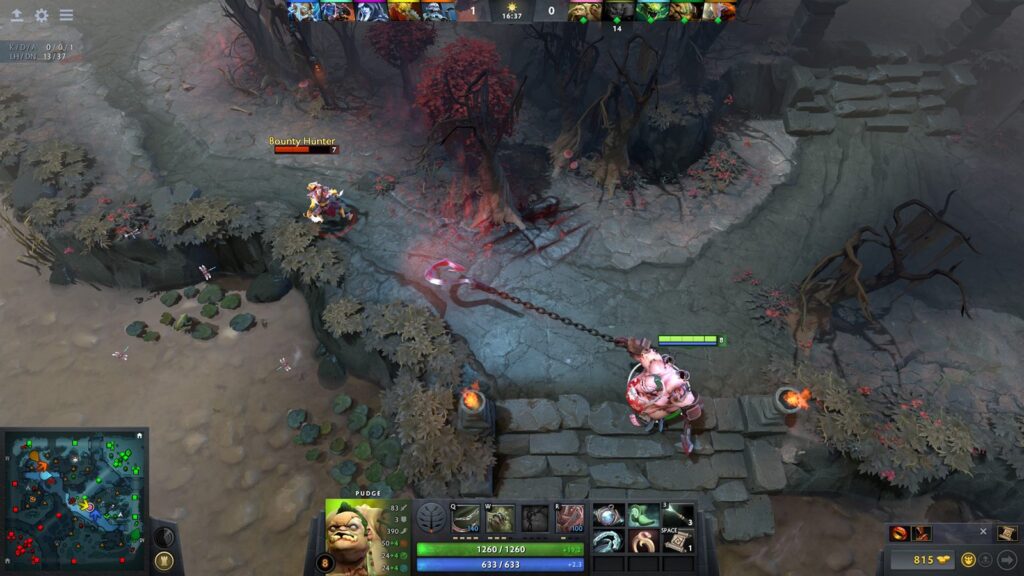
Hero picks that work at low MMR pos 4: Spirit Breaker, Earthshaker, Pudge (4), Clockwerk. All solo-kill, all create fights without setup, all scale into teamfight CC late game. The pos 4 hero pool at low MMR is forgiving – you don’t need to flash up Lion Hex correctly when Crusader cores facecheck Roshan pit.
The reason pos 4 stops dominating at Legend is that Legend supports actually know how to rotate. The “supports throw lanes” advantage compresses. By Divine, pos 4 is a fine role but no longer the standout climb. By Immortal, pos 4 is one of the hardest roles because its contribution depends on draft synergy and team coordination that the matchmaker can’t guarantee in solo queue.
Pos 5 climb math: why it’s the slowest at low MMR
Pos 5 is the support role that babysits the safe-lane carry. The job is winning lane for the pos 1, then enabling fights in the mid game with vision, saves, and CC. At low MMR, this is the worst climb role for a structural reason: the pos 1 you’re babysitting throws the lane half the time, and your individual performance metric (saves, vision, lane impact) is invisible when the carry refuses to last-hit (the r/learndota2 thread).
Pos 5 starts climbing at Divine and above because the cores you support actually convert lane wins into game wins. The job becomes mechanically demanding (positioning during teamfights, perfect timing on saves, vision battles in the late game) but the role’s MMR conversion rate jumps. A Divine pos 5 with strong save mechanics on Dazzle or Treant Protector can climb to Ancient 4-5 in a season at 55%; a Crusader pos 5 with the same skill ceiling struggles to leave Archon because the cores below them don’t capitalize.
If you main pos 5 and you’re stuck below Legend, switching to pos 4 for 50 games is usually the fastest unblock: same support sensibilities, more individual impact on the game outcome.
The “your highest win-rate role” rule and when it breaks
The strongest single rule for picking your climbing role is to queue the role you already have the highest sustained win rate on. A 58% win rate role beats a 52% win rate role over any timeframe long enough to matter. This is true at every bracket.
The rule breaks in two specific cases. First, at the very top of the ladder (Divine 5+, Immortal), per-role hero pool availability matters more than personal preference. If the meta has banned out the cores you main and the pos 4 pool is intact, switching to pos 4 for a season is correct even at a lower starting win rate. Second, if your visible rank is dragging because of role-queue handicap on a secondary role, committing to your primary closes the gap faster than splitting between two roles.
The rule also breaks if your “high win-rate role” is on outdated data. A 56% win-rate pos 1 you had two seasons ago doesn’t transfer if you’ve stopped playing carry for 9 months and your reflexes are gone. Win rate on a role you haven’t queued in months is fiction. Play 20-30 games to re-establish the number before trusting it.
If you’re trying to skip 200 games of role experimentation and land at the bracket your time budget can sustain, the Dota 2 MMR boost service runs the climb on your strongest role and hero pool. We profile the account, identify which position has the cleanest historical performance, and run that role to the target bracket, with no role-handicap drag from off-role experimentation.
Role queue penalty: full flex vs primary + backup
Queueing all 5 roles gives you the fastest queue times but the slowest climb rate. The matchmaker has to estimate 5 different skill levels with limited data per role, which means most of your hidden role MMRs sit below your visible rank. Your lobbies feel inconsistent because the system is drawing from different per-role values per match.
The cleanest queue setup for climbing:
- Primary role: the role you’re committing 70%+ of your games to, and your highest historical win rate.
- Backup role: one secondary role for the 20-30% of games where your primary is full. Pick the role that complements your primary (pos 1 main backs up with pos 3; pos 5 main backs up with pos 4; pos 2 main backs up with pos 3 or pos 4).
- No third role. Adding a third role splits the matchmaker’s estimate further and the off-role games hurt more than they help.
Queue times will be longer than full flex, typically 4-7 minutes at Legend-Divine instead of 1-3 minutes. That’s the trade. Quality of match goes up, climb rate goes up, queue time goes up. Liquipedia’s matchmaking page documents the role-queue mechanics in detail if you want the Valve-side reference.
Counter-arguments: when this recommendation doesn’t fit
The per-role rankings above are medians. Three specific cases break the recommendation.
You hate the role. Hating a role is a 5-10% win-rate hit through tilt, autopilot, and underinvestment in hero learning. A high climb-rate role you hate is worse than a medium climb-rate role you enjoy. The numbers don’t survive contact with your actual psychology.
You have a duo partner. Two-stacks are real coordination advantages. If you and a friend can run pos 1 + pos 5 with synergy (proper lane setup, perfect save timing, shared map awareness), that combo beats either of you solo-queuing your “optimal” role. Pos 5 with a known carry friend is a different game than pos 5 with a random.
You’re behavior-score capped. If your account is under 7,000 behavior, role choice is noise. The lobbies you draw have abandons, griefers, and tilt regardless of which position you queued. Behavior-score recovery comes first; role optimization comes after.
You’re at Immortal. At Immortal, all of this collapses. Role matters less than skill, draft, and stamina. Pros climb on whichever role they have the cleanest hero pool on, which usually means whatever role they played in their last team. OpenDota’s distribution data shows that the Immortal bracket is too thin a population for “best role” to mean anything statistical: it’s a bracket where individual mastery dominates and 1% of the playerbase is the entire data set.
Battle Cup, Turbo, and Unranked don’t count
Worth flagging because the confusion is common: Battle Cup, Turbo, and Unranked do not affect your ranked role MMR. Battle Cup awards trophies and matchmakes on Battle Cup MMR (a separate hidden value). Turbo is a fully separate matchmaking pool. Unranked drafts share some matchmaking signal with ranked but don’t change your ranked MMR.
If you’re trying to climb ranked, the games that count are ranked games on the role you’re climbing. Practice in Turbo is fine for learning a new hero; it does not count toward calibration or ranked progression. The same is true for limited-time event modes: Diretide MMR was never ranked-affecting and the same pattern holds for current event modes.
Frequently asked questions
What’s the easiest role to climb in Dota 2 for a new player?
Pos 1. Safe-lane carry has the simplest decision tree at low MMR (farm efficiently, hit your item timing, take a fight when you’re stronger than the enemy). The hero pool is forgiving – Wraith King, Sniper, Phantom Assassin all carry Herald and Guardian without requiring positional awareness most new players don’t have yet.
Is pos 5 actually unplayable for solo climbing?
Not unplayable, just slow at low MMR. Pos 5 climb rate is roughly 60% of pos 1 climb rate at Herald-Crusader because the cores you babysit throw lanes, and your individual impact metric is largely invisible when carries don’t capitalize on the lane wins you set up. From Divine up, pos 5 climbs at near-parity with pos 1 because the cores actually convert.
Does role queue MMR carry over to all roles?
No. The matchmaker tracks separate hidden MMR per role. Your visible rank is a weighted average across roles. Each role has its own handicap value that adjusts independently. Climbing 500 MMR on pos 1 does not directly raise your pos 5 hidden MMR – that role-specific number stays where your pos 5 history put it.
Can I switch roles mid-season without losing rank?
You can switch roles whenever you want, but your visible rank may drop because the new role’s hidden MMR is lower than your visible average. Plan for 20-30 games of rough lobbies while the new role’s MMR catches up. The drop is temporary; the visible rank stabilizes around the new average once the system has data.
Is pos 3 ever the best role for climbing?
Rarely. Pos 3 sits between the support roles (less self-sufficient) and the cores (less farm priority). The role works for committed offlane mains who have built a hero pool around lane survival and teamfight initiation, but it isn’t the fastest climb at any bracket. If you main pos 3 and have a 55%+ win rate, keep playing it; if you’re trying to pick a climbing role from scratch, pos 1 or pos 4 are better defaults.
How long does it take to climb a medal on a “good” role choice?
At 55% sustained win rate and +30 MMR per win, roughly 25 net wins per medal step (770 MMR per medal). At 5 games per day, that’s 50 games or about 10 days per medal. Picking the wrong role drops your win rate 3-5% and doubles that timeline. Picking the right role, one you’re personally a 55%+ on and that suits your bracket, is the single biggest lever on climb pace.
The best Dota 2 role for boosting MMR in 2026 is not a fixed answer, it’s the role you main, adjusted for your bracket. Pos 1 if you’re at Divine and farm efficiency comes naturally. Pos 4 if you’re at Archon and you can solo-kill on Spirit Breaker. Pos 5 if you’re at Divine and you’ve got the save mechanics. Pos 2 if you’re high enough at mid lane that variance doesn’t tilt you. The numbers in the tables above are the medians; your personal win rate is the real signal. If you’d rather skip the role experimentation and have a booster run the climb on the position with the cleanest profile, the Dota 2 boost team handles MMR boosts at every role and bracket – we pick the position based on the account’s actual history, not a Reddit thread.