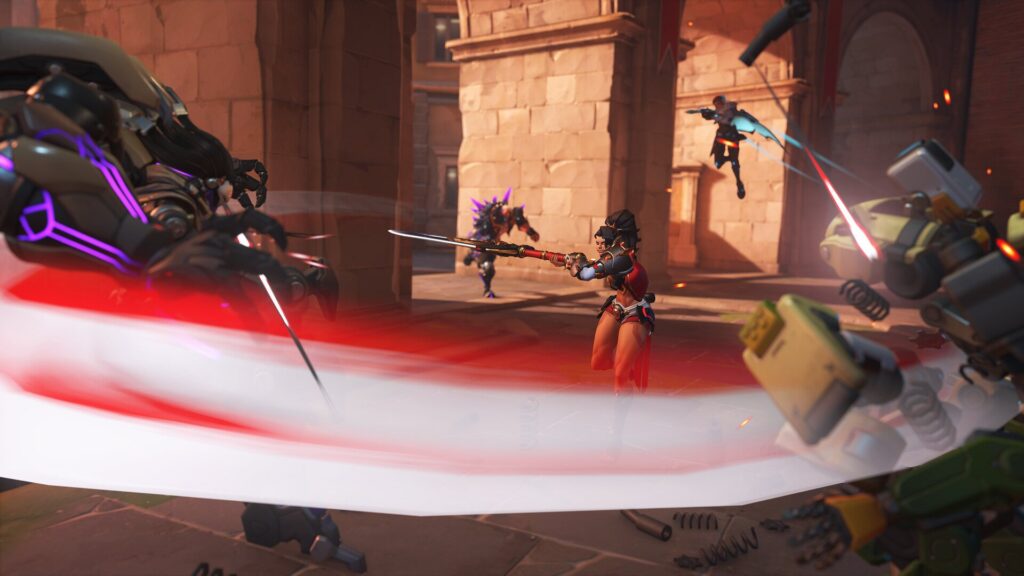
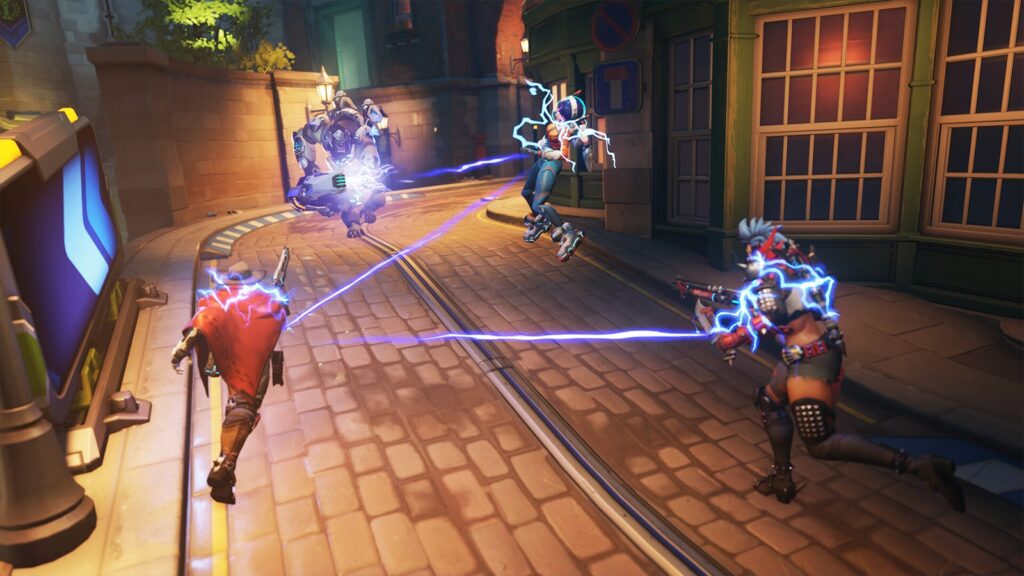
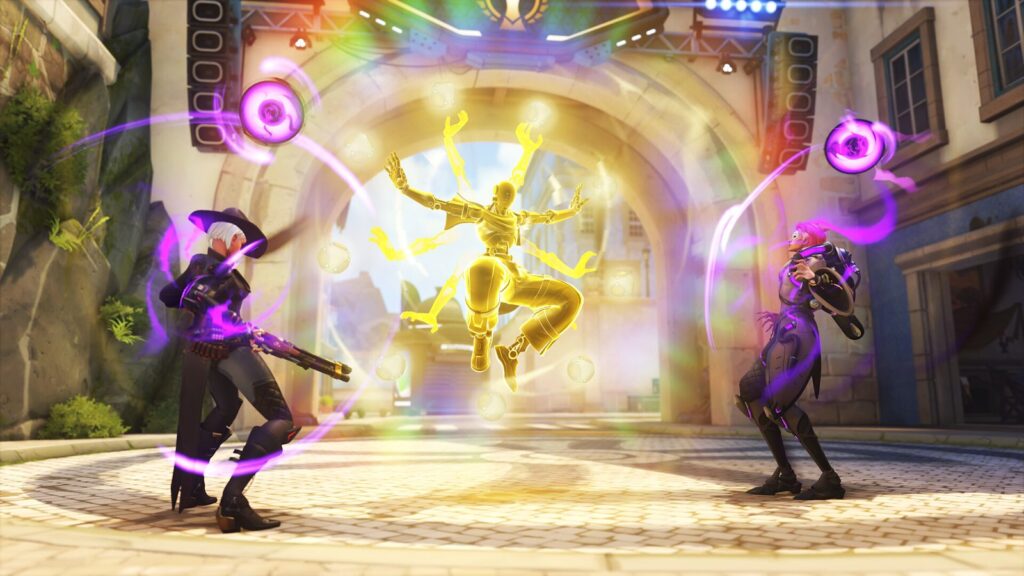
The best Overwatch team comps for competitive aren’t a fixed list of five heroes – they’re three archetypes, and knowing which one to run is worth more than any individual pick. Dive, poke, and brawl. Each beats one of the others and loses to the third, like rock-paper-scissors, and the team that reads the matchup and commits to the right one wins the series of fights that decides the game. Below is what each comp does, the heroes that fill it this season, when to call it, and which comp climbs your specific tier.
Overwatch runs 5v5 role queue: one Tank, two DPS, two Support. Every comp is built around the Tank, who sets the archetype – a Winston means dive, a Sigma means poke, a Reinhardt means brawl – and the other four slots fall in line behind that identity. Get the Tank-to-comp match wrong and you’ve got five heroes pulling in different directions, which is how most solo-queue games actually lose.
The three comps and the triangle they form
These three archetypes counter each other in a clean triangle. Read which corner the enemy is sitting in and you get to react to a comp instead of blindly picking one.
- Dive – mobile heroes that close distance fast, isolate one target, and burst it before the enemy can react. Beats poke (it closes the gap poke needs) and loses to brawl (it can’t out-sustain a grouped close-range fight).
- Poke – long-range heroes that chip the enemy from a distance, win the attrition war, and force engages on their terms. Beats brawl (chips them down before they can close) and loses to dive (gets run over the moment the gap closes).
- Brawl – close-range, high-sustain heroes that group up and win the prolonged fight. Beats dive (out-heals the burst) and loses to poke (gets chipped before it can engage).
| Comp | Identity | Beats | Loses to | Skill / coordination needed |
|---|---|---|---|---|
| Dive | Mobile burst, isolate a target | Poke | Brawl | High – needs everyone to commit together |
| Poke | Long-range attrition, chip damage | Brawl | Dive | Medium-high – needs aim and patience |
| Brawl | Close-range sustain, group fights | Dive | Poke | Low-medium – most forgiving to run |
Dive comp
Dive is the highlight-reel comp: leap onto the enemy backline, delete a Support or a fed DPS, and win the fight 5v4 before it really starts. It’s also the comp that punishes solo queue the hardest, because a dive only works if all five players commit together.
The dive lineup
- Tank: Winston or D.Va, both Initiator sub-role tanks built to leap in and survive the dive (the Initiator passive heals them after staying airborne). D.Va took a small Micro Missiles nerf this patch, impact damage 3 to 2, but she’s still a premier dive anchor.
- DPS: Genji, Tracer, or Sombra, flankers who follow the tank’s engage and clean up the isolated target. Sombra’s hack neutralizes the enemy’s escape so the dive sticks.
- Support: Lucio for speed to enable the engage, plus a mobile flex like Kiriko or Juno who can survive being dived back.
When to run dive
Run dive when you have the coordination to commit as a five and a target worth diving – an out-of-position enemy Support or a fed DPS you can isolate. It shines on maps with flank routes and high ground. Do not run dive when your team won’t follow the engage, which in solo queue is most of the time. A dive where one person dives and four watch is just a feed with extra steps.
Poke comp
Poke is the patience comp: sit at range, chip the enemy down with sustained damage, and force them to engage into your spacing when they’re already low. It wins the attrition war and frustrates teams that want to brawl.
The poke lineup
- Tank: Sigma, Ramattra, or Orisa, tanks that hold a line and provide cover for the backline to poke from behind.
- DPS: Ashe, Widowmaker, or Pharah, long-range damage that chips from safety. Note Pharah’s Concussive Force and Rocket Salvo damage were cut this patch per the official Overwatch patch notes, though Mercy’s restored Guardian Angel and new Winged Reach perk make a pocketed Pharah viable again.
- Support: Ana and Baptiste, long-range healing that keeps the poke line topped. Baptiste got better this patch (Regenerative Burst cooldown 14 to 12 seconds), which is a real boon for sustained poke fights.
When to run poke
Run poke on open maps with long sightlines where the enemy can’t close on you easily, and against brawl comps you can chip before they engage. It demands aim and the discipline to hold position rather than chase. The fastest way to lose on poke is to get impatient and walk forward into the dive that poke is supposed to avoid.
Brawl comp
Brawl is the comp that climbs ranked, full stop, especially below Diamond. Group up, walk in together, and win the close-range sustained fight through raw healing and bodies. It’s the most forgiving comp to execute and it solves the single biggest low-rank problem in one move: it forces your team to stop staggering and group up.
The brawl lineup
- Tank: Reinhardt, Junker Queen, or Mauga, close-range tanks that hold the front and create the fight. Junker Queen’s wound self-heal got buffed this patch (2.25x to 2.5x), reinforcing the sustain identity.
- DPS: Reaper, Soldier 76, or Mei, close-to-mid range damage that fights inside the brawl rather than poking from outside it.
- Support: Lucio or Brigitte for the in-fight sustain and peel, paired with a main healer like Ana or Kiriko. Lucio’s Sound Barrier took a nerf this patch (overhealth 750 to 625, duration 6 to 5 seconds), so the ult is a bit less of a panic button than it was.
When to run brawl
Run brawl on close-quarters maps, against dive (you out-sustain their burst), and in any solo-queue game where your team won’t coordinate anything fancier. This is the default comp for the Gold-to-Diamond ladder because it’s the comp that wins the grouped 5v5 your rank actually fights. If you’re unsure what to run, run brawl.
Comp discipline is exactly what separates a stuck rank from a climbing one – and if grinding the right comp into a team that won’t group up has worn you down, our Overwatch rank boost runs the climb by role with players who read the comp matchup every fight. The tier-by-tier version of this – what’s actually blocking you at each rank – lives in how to escape Gold, Platinum, and Diamond.
Which comp climbs your rank
Pros run dive on stage because they have five players in voice committing on a count (this r/Competitiveoverwatch breakdown of why pro tactics fail at lower ranks). You do not. The comp that climbs your rank is the one your team can actually execute, and that changes as you climb. Whichever archetype you settle on, check which heroes are currently strong inside it on Dexerto’s Overwatch tier list before you commit a season to a pick that just got nerfed.
| Rank band | Best default comp | Why |
|---|---|---|
| Bronze – Gold | Brawl | Most forgiving, forces grouping, wins the messy close-range fights these ranks default to. |
| Platinum – Diamond | Brawl or Poke | Teams group enough to brawl; poke becomes viable as aim and patience improve. |
| Master+ | All three, read the matchup | Coordination exists, so dive becomes reliable and comp-vs-comp reads decide games. |
The cleanest comp-based climb I tracked last season was a Plat team that did one thing: they ran brawl and refused to split up. No fancy dive, no four-person poke line, just five players grouping at the choke and walking in together every single fight. They climbed two divisions in a weekend because they stopped losing the 4v5s that staggering creates. Compare that to the Plat dive comps that look great in theory and die because one flanker peeled off to chase a kill nobody asked for.
Reading the enemy comp and adjusting
The triangle only helps if you read which corner the enemy is in and respond. Quick reads:
- Enemy chipping you from range and you can’t reach them? They’re poking. Swap toward dive and close the distance, because poke crumbles when the gap closes.
- Enemy leaping onto your backline and bursting your supports? They’re diving. Swap toward brawl, group tighter, and out-sustain the burst with peel.
- Enemy grouping up and walking into you close-range? They’re brawling. Swap toward poke, hold range, and chip them before they engage.
This is where comps and counters meet, since reading the enemy archetype tells you which heroes to swap to, and the counter-pick guide covers the specific matchups inside each adjustment. The high-level move is always the same: figure out the enemy’s corner of the triangle, then move to the corner that beats it.
Frequently asked questions
What are the main team comps in Overwatch?
Three archetypes: dive (mobile burst that isolates a target), poke (long-range attrition that chips from distance), and brawl (close-range sustain that wins grouped fights). Everything else is a variation on these. They form a rock-paper-scissors: dive beats poke, poke beats brawl, brawl beats dive.
What is the best comp for low ranks in Overwatch?
Brawl. It’s the most forgiving to execute, it forces your team to group up, which fixes the staggering that loses most low-rank games, and it wins the messy close-range fights Bronze through Gold default to. When in doubt at low ranks, run brawl.
When should you run dive in Overwatch?
When you have the coordination to commit together and a target worth diving, like an out-of-position Support or a fed enemy DPS. Dive is a high-rank comp because it falls apart the moment one player doesn’t follow the engage, which makes it a poor default in solo queue.
What beats a poke comp in Overwatch?
Dive. Mobile heroes close the distance poke depends on and force the fight up close, where poke heroes are weakest. If you’re getting chipped from range, the answer is to get on top of the enemy, not to trade poke for poke and lose the attrition war.
Do team comps matter in solo queue?
Yes, but loosely. You won’t coordinate a textbook comp with strangers, but nudging your team toward brawl – grouping up and fighting sustained close-range fights – wins far more solo-queue games than forcing a dive nobody commits to. Comp identity matters more than perfect hero selection.
Which comp is best on attack versus defense in Overwatch?
Brawl and dive are generally stronger on attack because they dictate the engage, while poke shines on defense where you can hold long sightlines and chip an attacking team before they reach the point. That said, map geometry matters more than the attack/defense split, so read the sightlines first.
Comps win games at the level of the whole team, which is exactly why they’re the highest-leverage thing you can learn: a team that runs the right archetype and commits to it beats five better individual players pulling in different directions. Default to brawl while you climb, read the enemy’s corner of the triangle, and swap to the comp that beats it. If you’d rather skip the part where your team won’t group up, you can have our team run the climb for you by role, on your schedule.