Winning your lane in Dota 2 comes down to four mechanics stacked on top of each other: last-hitting and denying, controlling creep equilibrium, pulling and stacking the neutral camps, and using creep aggro to keep the wave where you want it. Master those and the safe lane vs offlane matchup stops being a coin flip and becomes something you decide. This Dota 2 laning guide walks through each mechanic the way we actually use it on boosts, plus the part most guides skip: when to stop laning and rotate. Put together, they give you one connected way to win the lane instead of five disconnected tips.
We boost accounts across every bracket, and the single most reliable predictor of who climbs isn’t hero pool or reaction time – it’s the number in the top-left corner at 10 minutes. Fix your lane and the rest of the game gets dramatically easier, because you play it with a level and item lead instead of chasing one.
Last-hitting and denying: the two clicks that decide everything
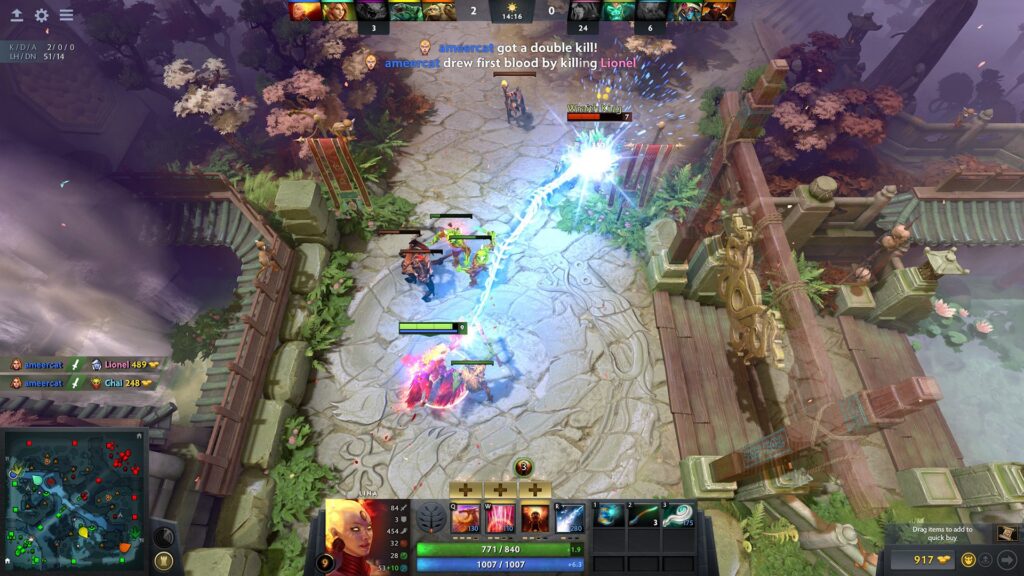
Everything in the lane exists to protect two clicks: the last hit that gives you the gold, and the deny that takes it away from the enemy. In Dota 2, only the final hit on a creep pays out gold, and you get full experience for being nearby – so a lane is really a contest over who secures more creeps. The wrinkle that separates Dota from most games is the deny: you can attack your own creep once it drops below half health, and denying it means the enemy gets no gold from that creep and reduced experience. Half of a good lane is denying, and most players below Archon barely do it.
Put the two together and a dominant lane isn’t “I got a kill.” It’s “I secured 8 of the last 10 creeps and denied 3 of theirs,” which quietly turns into a level and a couple hundred gold every wave. That compounds. Here’s the rough benchmark we use when we’re reading a replay – treat these as a community rule of thumb rather than an official stat, since Valve doesn’t publish per-bracket last-hit data:
| Bracket | Typical carry last hits at 10 min | What’s usually holding them back |
|---|---|---|
| Herald / Guardian | ~15-30 | Missing last-hit timing, no denies, wrong equilibrium. |
| Crusader / Archon | ~30-45 | Denies ignored, lane pushed into ganks. |
| Legend / Ancient | ~45-60 | Equilibrium mostly good, pull/stack timings missed. |
| Divine / Immortal | ~60-75 | Optimizing aggro, pulls, and rotation timing. |
| Pro | ~70-90 | Nothing – this is the ceiling. |
If you take one drill from this whole guide: load a lane, turn off auto-attack, and practice hitting creeps only on the last hit while denying every one of yours that drops low. Ten minutes a day for a week moves that number more than any hero swap. You can audit your own count after every match on Dotabuff, which logs your last hits, GPM, and XPM per game.
Creep equilibrium: control where the wave lives
The lane isn’t a fixed place – it’s wherever the two creep waves happen to collide, and you control that spot. That collision point is the creep equilibrium, and where it sits decides whether you’re farming safely or feeding a gank. The rule the r/learndota2 crowd repeats for a reason: a wave near your own tower is a good wave, a wave shoved up to the enemy tower is a death sentence.
Here’s the physics. If you only last-hit and let your creeps die naturally, the enemy wave tends to win the fight and the equilibrium drifts toward you, near your tower – exactly where a safelane carry wants it, close to the tower and the easy pull camp. If you over-attack the enemy creeps (auto-attacking, hitting them off cooldown), you push the wave toward the enemy tower, where you’re deep, vulnerable to a rotation, and denied your own tower’s protection. So: last-hit and deny to hold equilibrium near you; only push on purpose. Denying is also equilibrium control, because every denied creep is one fewer body on your side pushing the wave forward.
The community consensus on managing this is well worth reading – the r/learndota2 laning discussions have some of the clearest breakdowns of why a controlled wave beats a pushed one, especially for newer players who instinctively want to shove. Fight that instinct. A slow, controlled lane near your tower is a won lane.
Pulling and stacking: the support’s real job
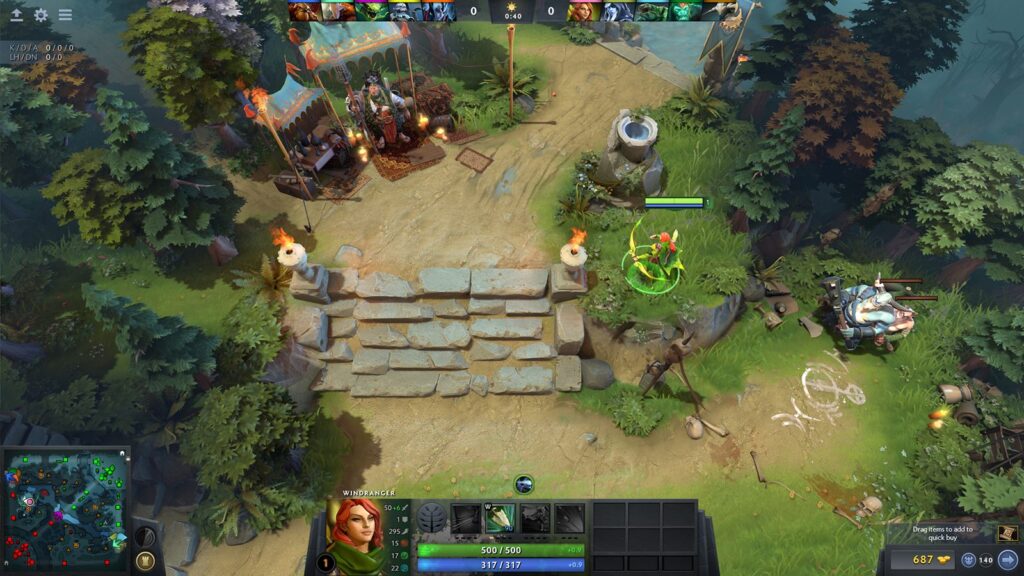
If you’re the hard support, your last hits matter far less than your camp management – pulling and stacking are how a pos-5 wins a lane without touching a single enemy hero. A pull is when you aggro the neutral easy camp so it walks into your lane and fights your creeps. That does two things at once: it resets the equilibrium back toward you (great when the wave is drifting to the enemy tower), and it denies the enemy carry the experience and gold from those creeps, since they die to neutrals instead of feeding the lane.
The classic pull windows are roughly the :15 and :43 marks on the standard easy camp, but treat those as approximate – exact pull timings drift every time Valve reshapes the map, so check the current layout rather than trusting a number from three patches ago. A clean double-pull (pulling the wave through two camps) can hard-deny an entire wave of enemy farm, which is why a good pos-5 is worth more to a carry than a flashy roamer.
Stacking is the other half. If you aggro a neutral camp and lead it out of its spawn box just before the top of the minute – around the :53 mark for most camps, a touch earlier for the big and ancient camps – a fresh camp spawns on top of the old one. Stack two or three and your carry gets a pile of free jungle gold to clear later. The pos-5 who pulls the wrong camp and pushes the lane into a gank is a meme for a reason, so learn which camp is which before you start freelancing.
Creep aggro: the quiet trick that wins lanes
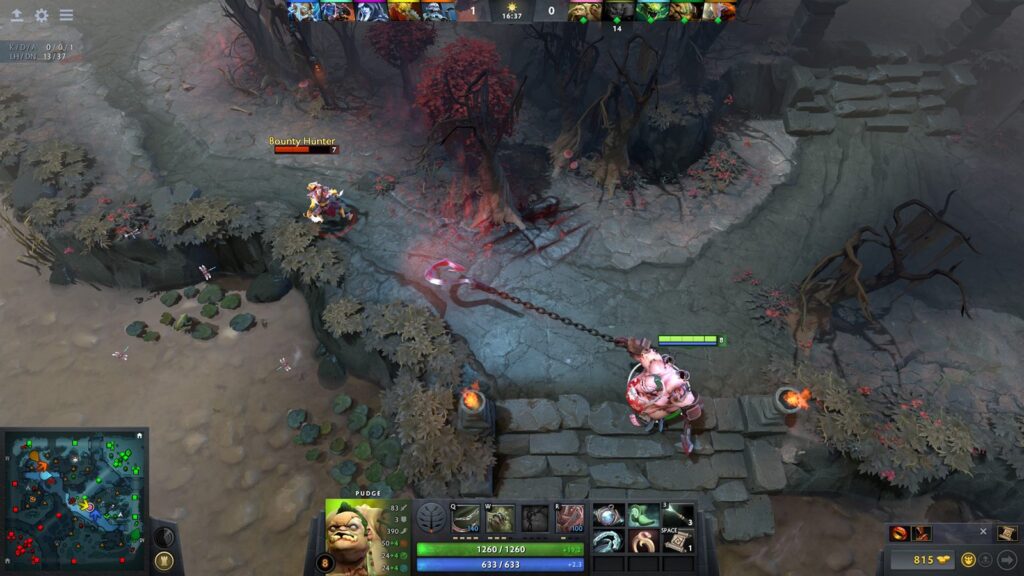
Creep aggro is the highest-value mechanic almost nobody in the low brackets uses, and it’s free. When you right-click an enemy hero (or press attack and click them), nearby enemy creeps aggro onto you for a few seconds. Pull that aggro and walk back toward your side, and the enemy creeps chase you – dragging their whole wave toward your tower and pulling the equilibrium your way without you attacking a single creep.
Two practical uses. First, equilibrium control: aggro the enemy creeps every few seconds to keep the wave sliding back to you, so you farm safe and they farm exposed. Second, denies and last hits: pulling aggro repositions the creeps so you get better angles on the last hit and the deny. It looks like fidgeting to a spectator, but it’s the difference between a lane that drifts into danger and one that sits comfortably in your pocket. Get in the habit of tapping enemy-creep aggro on cooldown and your equilibrium problems mostly solve themselves.
Safe lane vs offlane: different jobs, different mechanics
The lane you’re in changes what “winning” even means, so stop playing every lane the same way. The safe lane (bottom for Radiant, top for Dire) is where the pos-1 carry farms with the pos-5’s protection – the goal is uncontested last hits and hitting item timings. The offlane (top for Radiant, bottom for Dire) is the hard lane: you’re the pos-3 fighting for scraps, and survival plus your level and item timings matter more than raw farm. Here’s the split:
| Lane | Who plays it | Win condition | Key mechanic |
|---|---|---|---|
| Safe lane | Pos 1 (carry) + Pos 5 (hard support) | Uncontested farm, hit item timings | Hold equilibrium near tower, pull to deny enemy |
| Offlane | Pos 3 (offlaner) + Pos 4 (soft support) | Survive, reach level/item spikes, deny enemy carry | Creep aggro to farm at the edge, disrupt enemy pulls |
| Mid | Pos 2 (mid) | Win the 1v1, hit levels first, control runes | Deny hard, secure river runes, punish misses |
The offlane in particular is a survival puzzle, not a farming one. You play at the edge of the wave where the enemy can’t easily jump you, you use creep aggro to reel single creeps toward you for safe last hits, and you counter-pull or disrupt the enemy support’s pulls to keep their carry hungry. A pos-3 who reaches their key item alive with a couple of enemy denies has won the lane, kills or not. Which role suits you feeds directly into how fast you climb – we broke down which role climbs fastest if you’re choosing where to specialize.
If the lane phase is where your games keep unraveling – the pos-5 who pulls into ganks, the carry stuck at 30 last hits at 10 minutes – our Dota 2 MMR boost team can take the account through the brackets while you watch the replays and copy the exact equilibrium and pull habits above. It’s the fastest way to see what a controlled lane looks like from the inside.
When to rotate: don’t marry the lane
A won lane is only worth something if you cash it in, and the most common climbing mistake we see is players who win lane and then stand there farming it into irrelevance. Leave the lane when one of three things is true: your farm slows because the wave is contested or dried up, you hit a level or item spike that makes you strong somewhere else on the map, or a rune or objective opens up where your presence is worth more than the last hits you’d get standing still.
Supports rotate earliest – once your carry is stable and you hit the levels for your key spells, your value is in ganking a sidelane or securing runes, not soaking XP you don’t need. Cores rotate on power spikes: a mid who hits their kill item leaves to make a play, a carry who hits a farming item leaves lane for the jungle and stacks. Overstaying a won lane hands the enemy time to recover the exact lead you just built. The lead is the point; the lane is just where you earned it.
Where good laning still loses the game
Perfect laning doesn’t win games by itself, and pretending otherwise is how mechanically clean players stay hardstuck. Two honest caveats. First, a lead you never translate into a rotation, a tower, or an objective evaporates – we’ve watched players win lane by 3,000 gold and lose the game because they never left to press the advantage. Second, some heroes and matchups want to lose lane on purpose: a greedy afk carry might concede early farm to stack the jungle safely, and some split-push offlaners are happy to give up the lane to farm elsewhere. Read the matchup before you commit to “winning” a lane that your hero doesn’t actually need to win. If you’re not sure which heroes forgive a rough lane, we listed the most forgiving solo-queue heroes that let you recover from a bad start.
The cleanest climb we tracked recently was a Crusader-to-Ancient run where the pos-1’s only real change was the lane: his 10-minute last-hit average went from around 35 to about 60, purely from holding equilibrium near the tower and actually denying. The MMR followed the CS number almost one to one. That’s the whole thesis of this guide – the lane is the lever, everything downstream is easier when you pull it.
Frequently asked questions
What is the most important laning skill in Dota 2?
Last-hitting paired with denying. Gold and experience come from securing your own creeps and cutting the enemy off from theirs, and nearly every other lane mechanic exists to protect those two clicks. Denies especially are what separate low-bracket laning from good laning.
What is creep equilibrium and why does it matter?
It’s the spot where the two creep waves collide, and you control it. Keeping it near your own tower means safe farm, easy pulls, and tower protection; letting it drift to the enemy tower leaves you deep and exposed to ganks. Last-hitting and denying hold it near you, over-attacking pushes it away.
When should I pull as a support?
Pull when the wave is drifting toward the enemy tower and you want to reset it, or when you want to deny the enemy carry the farm and experience. The classic windows are roughly the :15 and :43 marks on the standard easy camp, but exact timings shift with each map change, so verify the current layout.
How many last hits should I have at 10 minutes?
As a rough community benchmark, a comfortable carry aims for around 40-60 by 10 minutes; strong players push past 60 and pros reach 70-90. Most players below Archon sit in the 20-40 range, which is usually the single highest-impact thing to fix for climbing.
How do I win the offlane in Dota 2?
Survive first, farm second. Play at the edge of the wave, use creep aggro to reel in safe last hits, deny the enemy carry, and disrupt their support’s pulls. Reaching your key level and item timings alive is a lane win even without a single kill.
When should I leave lane and rotate?
When your farm slows, you hit a meaningful level or item spike, or a rune or objective makes your presence elsewhere worth more than the last hits you’d get standing in lane. Overstaying a won lane is one of the most common ways players waste the lead they just built.
Win the two clicks, hold equilibrium near your tower, let your support pull and stack, use creep aggro to keep the wave in your pocket, and leave the moment the lane stops paying – that’s the entire laning game in one breath. Keep an eye on the official Dota 2 gameplay updates, since camp and rune timings shift between patches and the numbers here move with them. And if you’d rather have a top-bracket player build the lead for you while you learn from the replays, our boosters can climb the MMR ladder on your account using the exact laning framework above.