Worlds 2026 runs from October 15 to November 14, hosted across three American cities, with 19 teams and a Grand Final at Barclays Center in Brooklyn. That is the schedule answer, and you can screenshot the table below and stop reading if that is all you came for. If you also play ranked, there is a second question worth more of your time: how much of what you are watching on stage should change the way you draft tonight? Less than you think, and below Diamond, close to none of it.
This page is built to sit in a browser tab for the month. Full schedule with venues, the format stage by stage, the 19 slots by region, and then a blunt breakdown of which pro habits survive contact with solo queue. Most of them do not.
Worlds 2026 schedule: every stage, date and venue
Three stages, three cities, one month. Riot split the event across a studio in Los Angeles, an arena in Texas and Barclays Center for the Final, and the broadcast changes character noticeably as the bracket narrows. Dates and venues below come from Riot’s own MSI and Worlds 2026 announcement.
| Stage | Dates | Venue | City | Series format |
|---|---|---|---|---|
| Play-In | Oct 15 to 18 | Riot Games Arena | Los Angeles, CA | 4 teams, double elimination, all Bo5, one advances |
| Swiss rounds 1 to 3 | Oct 23 to 26 | Credit Union of Texas Event Center | Allen, TX | 16 teams, Bo1, with Bo3 for advancement and elimination matches |
| Swiss rounds 4 to 5 | Oct 28 to 31 | Credit Union of Texas Event Center | Allen, TX | Same, 3 wins advances, 3 losses eliminates |
| Knockouts (quarters and semis) | Nov 3 to 8 | Credit Union of Texas Event Center | Allen, TX | 8 teams, single elimination, Bo5. Semifinals on Nov 7 and 8 |
| Grand Final | Nov 14 | Barclays Center | Brooklyn, NY | Bo5 |
The gap that catches people out is the six-day pause between the Play-In finishing on the 18th and Swiss opening on the 23rd, plus the two-day breather inside Swiss itself. If you are planning viewing around a work week, those are your free evenings. The other one is the long run-up to the Final, since knockouts finish on November 8 and then nothing happens until the 14th.
How the Worlds 2026 format works
Riot kept the 2025 skeleton and only changed the Play-In and regional seeding, so if you watched last year you already know the shape.
The Play-In is four teams in a double-elimination bracket, every series a Bo5, and one team advances. That ratio is harsher than the name suggests: three organizations fly to Los Angeles, play best-of-fives, and go home before the tournament proper starts. No group-stage cushion, no soft landing.
The Swiss stage is sixteen teams over five rounds with no fixed bracket. You are paired against a team on your record, three wins puts you into the knockouts, three losses sends you home. Ordinary rounds are Bo1, any series that can advance or eliminate a team is a Bo3, and those Bo3s run Fearless Draft, meaning champions a team has already used in the series cannot be picked again by that team. Fearless is why Swiss produces the strangest drafts of the year. By game three a team has burned its comfort picks and has to reach into the pool it has been practicing in private for months.
Knockouts are eight teams, single elimination, Bo5 the rest of the way. Quarters and semis stay in Allen, the Final moves to Brooklyn. Nothing clever there, just five games and a plane ticket.
Bo1 Swiss rounds are where the upsets live, because one early jungle pathing error can decide a match before the drafts have anything to say. If you are short on time, the Bo3 elimination matches are the games with real depth. Our breakdown of how draft phase actually works makes the pick-and-ban order a lot less opaque if you want to follow the reasoning live.
The 19 slots, region by region
Every major league starts with three seeds, and two extra slots are earned through MSI, with the champion’s region and the runner-up’s region each picking up a fourth. Hanwha Life winning MSI 2026 is what puts the LCK on four.
| League | Region | Slots at Worlds 2026 | Note |
|---|---|---|---|
| LCK | Korea | 4 | Base 3 plus the MSI-derived extra |
| LPL | China | 4 | Base 3 plus the MSI-derived extra |
| LEC | EMEA | 3 | Base allocation |
| LCS | Americas | 3 | Base allocation |
| LCP | Asia-Pacific | 3 | Base allocation |
| Remaining qualifying paths | Other leagues | 2 | Fills the field to 19 |
| Total | 19 | 15 direct plus 4 into Play-In |
Fifteen of the nineteen go straight into Swiss. The four lowest seeds go into the Play-In bracket, and only one of them joins the sixteen. Which specific teams occupy which slot moves right up until regional playoffs finish, so check the official bracket rather than any page that claims a locked roster in September.
What actually transfers from the Worlds meta to your solo queue
Most of what wins on the Worlds stage will lose you LP. Not because the picks are bad, but because they answer a problem you do not have. A pro team is five people on comms who have scrimmed the same rotation for six weeks, and their drafts optimize for coordinated execution, for hitting a timing window together, for a mid-game teamfight everyone already agreed on. Your game has four strangers, one autofilled support, and someone typing about their jungler in minute nine.
There is also a patch gap. Worlds is played on a locked patch, usually a couple behind live, so the champions you watch dominating a Bo5 may already have been tuned on the ladder you are queueing into. Watching a pick look unstoppable on Saturday and losing three games with it on Sunday is a very specific flavor of pain.
| Pro archetype (typical picks) | Why it works on stage | Does it transfer? | Rank where it starts to pay off |
|---|---|---|---|
| Scaling control mage (Azir, Ryze, Corki) | Five players protect one win condition for 35 minutes | No. Nobody peels for you and the game rarely reaches your spike intact | Master and up, or a one-trick with 200 games |
| Weakside tank top (Ornn, K’Sante) | Survives alone while the team wins a different map side on purpose | No. There is no coordinated “different map side” in solo queue | Diamond and up, and only if you enjoy being ignored |
| Enchanter plus protected hypercarry (Lulu or Karma with Zeri, Aphelios) | The whole draft agrees on one carry and plays around them | Rarely. Your carry may be the one who int-ed at level 3 | Emerald and up, with a duo partner |
| Utility jungle (Sejuani, Maokai) | Sets up objectives with four teammates already in position | Partly. Fine as a pick, but you give up the ability to carry a losing game | Any rank, though it caps your solo carry ceiling |
| Flex and priority picks | Draft leverage across three roles before roles are revealed | No. Solo queue reveals roles before champ select, so the leverage does not exist | Never. This is a pro-format artifact |
| Roaming support (Bard, Pyke) | Map-wide plays the whole team converges on | Coinflip. Enormous when it lands, griefing when your ADC dies alone | Platinum and up, if you play it every game |
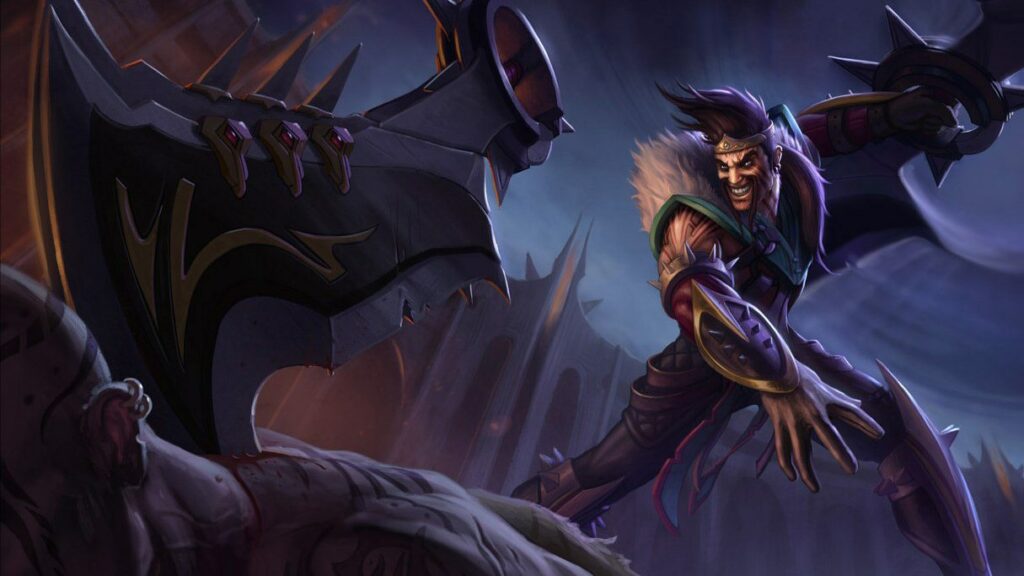
| Early-game lane bully (Renekton, Draven, Nidalee) | Often removed in champion select at pro level because pros defuse the lead | Yes, and it is the single best category on this table for climbing | Every rank up to Diamond |
| Fearless Draft flexibility (deep pool, 12+ champions) | Mandatory when your comfort picks are burned by game three | No, and it actively hurts. Solo queue rewards a pool of 3 to 5 | Never. Depth is a stage requirement, not a ladder one |
The last two rows carry the lesson. The archetype pros avoid is the one that climbs, and the discipline pros are forced into is the one that stalls you. Champions that get removed in champion select or simply ignored at Worlds are often excellent for you, because their weakness is that a coordinated team can play around them, and your opponents are not a coordinated team. The community argues this out every year on r/leagueoflegends, usually while a mid laner is being balanced downward for something that only happens on stage.
The reliable way to check any of this yourself is win rate filtered by rank rather than pick rate. A champion trending upward at Master and above and flat at Gold is a coordination pick. One that is strong everywhere below Diamond and mediocre above it is a solo queue pick, and it is the one you want. op.gg’s champion statistics let you split by tier, and our own champion tier list broken down by rank is built on exactly that split.
If watching a month of near-perfect League has left you wanting your own rank to match the standard of play you have been staring at, our League of Legends boost team runs division climbs, placements and duo queue while the tournament is on. It is a shortcut through the part of the ladder you find least fun. It does not replace learning the game.
The Worlds-time ladder effects you will actually feel
Three things change on the ladder during a Worlds run, and only one of them has anything to do with champion balance.
The first is the imitation wave. A champion gets a highlight play on Saturday and by Sunday evening every mid lane in Emerald has locked it. Pick rate spikes, win rate drops, and the counter goes underdrafted for about a week. That is a real opportunity if you are the one holding the counter instead of the trend, which is why our lane-by-lane counter pick guide earns its keep in late October more than at any other point in the year.
The second is skins. Worlds-timed releases push their champions into draft regardless of strength, because a player who just bought a 1,350 RP skin is playing that champion tonight whether or not it is any good. Treat a pick rate bump around a skin drop as noise.
The third is watch-and-queue tilt, and it is the one that actually costs LP. Six hours of Bo1s, a beer, and then a ranked queue at midnight because you feel inspired. We see it on orders every year, a cluster of clients whose LP graph has a visible crater across late October that has nothing to do with their skill. Watch all day if you want, then queue normals afterwards. Your ranked account will thank you in November.
Two things people ask about every October. Fearless Draft is a tournament rule and it is not coming to your solo queue lobby, and neither is anything else about the stage format. Worlds also does not touch the ranked season: Season 3 “Classic” has been running since late July and continues past the tournament into early 2027, with no reset attached to the event. Your LP on November 15 is whatever you left it at on October 14, plus whatever the midnight queues did to it.
Where this reading is wrong
The counter-argument deserves a fair hearing, because “pro meta is useless to you” gets overstated by people who want an excuse to keep first-picking their comfort champion.
Champions are not actually split into pro-only and solo-queue-only camps. A strong champion is usually strong everywhere, and plenty of Worlds staples are perfectly good on the ladder in the hands of someone who has played them enough. What does not transfer is the assumption baked into the pick, that four other people will do a specific thing at a specific time. Take the same champion and play it selfishly and it often works fine.
The other honest caveat is rank. Everything above is written for the ladder most people are on, roughly Iron through Diamond. Above Master, coordination in solo queue is genuinely higher, the champion pools are deeper, and pro drafts start to look a lot more like something you can copy. The higher you climb, the more the tournament becomes an actual reference rather than entertainment.
The tier-by-tier verdicts in that table are also our operator read from watching climbs across the whole ladder, not a published statistic. Treat them as informed opinion with a bias toward what we see working on real accounts.
Frequently asked questions
When is Worlds 2026?
October 15 to November 14, 2026. Play-In runs October 15 to 18, Swiss runs October 23 to 26 and October 28 to 31, knockouts run November 3 to 8, and the Grand Final is November 14.
Where is Worlds 2026 being held?
The United States, across three venues. Play-In at Riot Games Arena in Los Angeles, Swiss and knockouts at the Credit Union of Texas Event Center in Allen, Texas, and the Grand Final at Barclays Center in Brooklyn, New York.
How many teams are at Worlds 2026?
Nineteen. Fifteen go straight into the Swiss stage and four contest the Play-In bracket, where a single team advances to make the Swiss field up to sixteen.
How does the Worlds 2026 Swiss stage work?
Sixteen teams play five rounds, paired each round against a team with the same record. Three wins advances you to the knockouts, three losses eliminates you. Ordinary rounds are Bo1 and any match that can advance or eliminate a team is a Bo3 played under Fearless Draft.
What is Fearless Draft?
A series rule where champions already used by a team earlier in the series cannot be picked again by that team. It forces deep champion pools and produces the strangest drafts of the tournament. It applies only to the relevant tournament series, never to your ranked games.
Should I copy the Worlds meta in ranked?
Mostly no, at least below Diamond. Pro drafts assume five coordinated players and a locked tournament patch, and both assumptions break in solo queue. Copy the mechanics and the wave management, not the champion select.
So: October 15 to November 14, three venues, 19 teams, five Swiss rounds and a Brooklyn Final. Keep the schedule table handy, watch the Bo3 elimination matches if you are short on time, and resist the urge to lock whatever just won a highlight reel. The habits worth stealing from Worlds are wave management, vision timings and the ability to close a won game, none of which appear in champion select. If you would rather spend the month watching than grinding and still come out the other side with a better rank, our team handles division climbs, placements and duo queue on your schedule while Worlds is on.