Split pushing in LoL is sending one champion to pressure a side lane and threaten a turret while your team does something else with the map. The one-line answer to “should I split or group”: split when you have a side laner who wins their matchup and can survive a collapse, and group when a major objective is up or your comp wins a straight 5v5. Done right, a split push wins games your team could never win in a teamfight. Done wrong, it is the fastest way to hand the enemy a free Baron. This guide gives you the when-to-split decision, how to set up a 1-3-1, the best split push champions, and how to stop throwing with the classic split-and-die.
We fix this on boost orders constantly, because split pushing is where “good macro” and “int” live one bad rotation apart. A splitter who reads the map is worth two teamfights. A splitter who face-checks the enemy jungle with no Teleport is worth negative one. This guide keeps you on the right side of that line.
What split pushing actually does to the enemy
A split push is a numbers problem you force on the other team, not just a lane you push. The moment your side laner threatens a turret, the enemy has three bad choices: send one person and probably lose that duel, send two or three and get outnumbered everywhere else, or ignore it and lose the tower plus map control. Every option costs them something. That is the entire value of the strategy, and it is why a single strong duelist can drag a losing game back to even.
This is also why split pushing scales with your champion’s threat. If your side laner one-shots a turret and wins any 1v1, the enemy has to answer with multiple people, and now your four teammates are playing a 4v3 or 4v2 across the map. If your splitter is a squishy who dies to a single rotation, you have not created a threat, you have created a bounty. The pressure only exists if the answer to your split is genuinely painful for the other team.
Teleport is the multiplier here. A splitter with TP threatens a side lane and can still show up at Dragon or in a mid fight two seconds later, so the enemy can never fully commit to stopping you. The Riot Wiki Teleport entry has the current cooldown and mechanics; the short version is that TP is what turns a risky solo push into a low-risk, high-pressure play. The community works through the same logic constantly in the r/summonerschool split push thread, where the recurring answer to “when do I split” is the exact one we keep coming back to: split when your presence forces a response, not just when a lane happens to be pushed. The takeaway for this section is that split pushing is about the threat you represent, not the minions you kill.
The 1-3-1 and 1-4: how to set up the map
A 1-3-1 stretches the enemy across the whole map so they cannot defend everything, and it is the cleanest formation for a team with two side-lane threats. One champion pushes top, one pushes bot, and three group mid to hold the center and contest whatever spawns. The enemy now has to cover three lanes with five bodies, and if they collapse on one of your side laners, the other side lane and the mid group both get free pressure. It is a slow, suffocating way to win when your team cannot force a fight.
The 1-4 is the simpler cousin: one splitter, four grouped. You use it when only one champion on your team wins a side lane, or when your four want to force an objective while the splitter draws bodies away. The splitter’s job is to be annoying enough that the enemy sends at least one person to deal with them, tilting the objective fight in your four’s favor.
Both setups live or die on draft. You cannot run a 1-3-1 with two immobile mages who lose every side lane and get run down the second they walk past the river. You need side-lane winners with escape or TP, and a mid group that can hold a 3v3 or 3v4 long enough for the split to matter. If your team comp cannot support a split, forcing one just feeds. Before you commit to this as a game plan, draft a comp that can actually run it – the strategy starts in champ select, not at 20 minutes.
Wave management and TP: how to punish a split
Splitting is a wave-management play first and a dueling play second. Before you ever push into the enemy side turret, you want the wave crashing so the tower and minions do the work while you stay safe, not you standing on the turret alone while your wave sits behind you. Set a slow push, let the big wave crash, and chunk the turret during the crash window when the enemy cannot cleanly answer without giving up plates or a trade.
The punish loop is the real skill. You crash a wave into the enemy turret, and now the enemy has to send someone. If they send one, you win the duel or you TP out before their jungler arrives. If they send two or three, that is the signal your team was waiting for: your four collapse on the objective or the mid group, because the map is now lopsided. The mistake low-elo splitters make is treating the side lane as a solo mission instead of half of a two-part play with their team. You push, they respond, your team cashes in the response. If nobody cashes in, you are just farming a side lane while the game happens without you.
Keep Teleport and vision as your non-negotiables. Ward the enemy jungle entrances before you overstay, and never push past the point where a collapse can catch you without an escape up. The cleanest splitters we track never enter a side lane without an answer to “what happens if three people show up.” If you do not have an answer, you do not have a split, you have a coin flip.
The split push vs group decision table
Here is the cheat sheet. Match your situation on the left and stop guessing whether to peel off to the side lane. This is the table to screenshot before your next ranked session.
| Situation | Split or group? | Why |
|---|---|---|
| You have a duelist who wins the side lane 1v1 | Split (1-3-1 or 1-4) | Forces a multi-person answer, tilting the rest of the map |
| Baron or Elder Dragon is up in under a minute | Group | Objectives need bodies; a lone splitter cannot contest them |
| Your comp wins a straight 5v5 teamfight | Group | Do not overcomplicate a fight you already win |
| Your comp loses a 5v5 but has strong side laners | Split | Avoid the fight you lose, win on the map instead |
| No neutral objective is up and lanes are pushed | Split with Teleport | Free pressure with an escape hatch to any fight |
| You are the splitter with no TP and no vision | Do not split yet | You are a bounty, not a threat; back off and ward first |
| Enemy sent 2 or more to answer your split | Your team groups and takes the objective | The map is now numbers-up somewhere; cash it in |
Notice the split answers all require a survivable threat and, usually, Teleport. The group answers all involve an objective or a fight you already win. If you cannot map your current game onto a row here, the default is to group and not throw a lead by wandering off alone. For how the objective timers interact with all of this, our objective priority guide breaks down which spawns are worth grouping for and which you can trade a split for.
If reading the table is one thing and executing a clean 1-3-1 at 3 a.m. in your promos is another, that is the exact gap our team closes. Our League of Legends rank boost boosters run these side-lane trades on instinct, so if you would rather see the climb than grind the macro muscle memory yourself, that is the shortcut. No overpromises, just people who have won a lot of games on the back of one well-played side lane.
The best split push champions
The best splitters win 1v1s fast and survive a collapse, in that order. A champion who deletes turrets but dies to a single rotation is not a splitter, they are a feeder with good waveclear. Here is the working shortlist we lean on, with the job each one does. Treat the tier of any single name as meta-dependent and check the current patch, but the archetype has been stable for years.
| Champion | Split style | Why they work |
|---|---|---|
| Fiora | Duelist | Wins nearly any 1v1, true damage shreds turrets, Riposte and dash survive collapses |
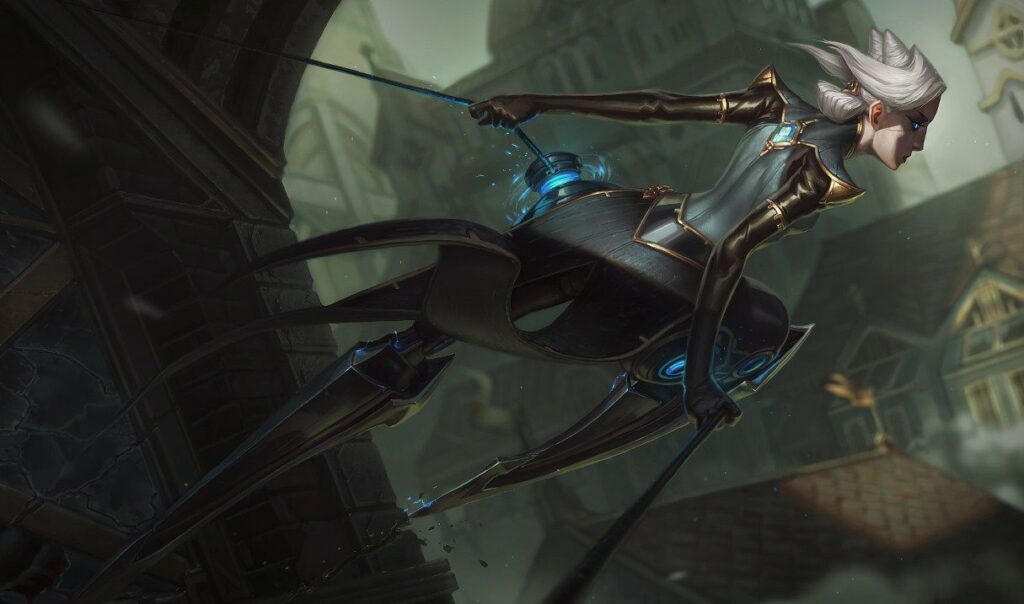
| Camille | Duelist / diver | Fast turret damage, hookshot escape, can also dive back into fights with TP |
| Jax | Duelist | Late-game 1v1 monster, E stun buys time, huge turret DPS with his passive |
| Tryndamere | Duelist | Undying ult means a collapse rarely kills him, shreds turrets while spinning away |
| Yorick | Siege splitter | Maiden and ghouls push a lane without him, so he can leave and it still pressures |
| Trundle | Tanky splitter | Pillar to block a collapse, sustains through minions, hard to kill quickly |
| Nasus | Scaling siege | Wither neuters one chaser, stacked Q one-shots turrets, tanky enough to overstay |
| Sion | Siege / trade | Passive lets him push a wave and take a turret even in death, ultimate roams back |
The pattern is the same across every name: a way to win the duel and a way to not die when the duel becomes a 3v1. If a champion has one but not the other, they can farm a side lane but they cannot truly split push, because they cannot survive the answer they provoke. Mid and jungle can split too when they fit that mold, but this job usually lands on the top laner, which is why side-lane threats dominate the archetype. For a deeper walk through the mechanics and champion-by-champion notes, Mobalytics’ split push breakdown lines up with the archetype logic above.
The counter-argument: the split-and-throw
The biggest weakness of split pushing is that it is the single most common way good players throw won games, and you need to name it before you rely on it. The split-and-throw goes like this: you get a lead, you peel off to the side lane, you overstay for one more turret plate, the enemy rotates three people onto you with no vision, you die, and your four teammates get forced into a fight or an objective down a body. You did everything right until the last ten seconds, and you still lost the game from ahead.
The most common version we untangle on orders is the Diamond top laner who splits with no Teleport, no wards, and no exit, dying on cooldown in the enemy jungle while insisting the team “won’t group.” One rule fixes almost all of it: never enter a side lane without an answer to a three-person collapse – Teleport up, an escape ability, vision on the flanks, or a wave state that lets you leave clean. If you cannot answer the collapse, you are not splitting, you are gambling.
The fix is not to stop splitting, it is to split with a leash on your own greed. Take the plates you can take safely, respect the map, and leave before the collapse arrives, not during it. A splitter who lives is a permanent problem for the enemy. A splitter who dies is just a scoreline for the other team’s highlight reel.
Frequently asked questions
What does split push mean in League of Legends?
Split pushing is sending one champion to pressure a side lane and threaten a turret while the rest of your team does something else, usually holding mid or contesting an objective. It forces the enemy to either send bodies to stop your splitter, weakening them elsewhere, or lose the turret and map control.
What is a 1-3-1 in LoL?
A 1-3-1 is a map setup with one champion in each side lane and three grouped mid. It stretches the enemy across the whole map so they cannot answer both side lanes and the middle at once, which is the classic formation for a team with two strong side-lane threats.
When should I split push instead of grouping?
Split when you have a champion who wins a side lane and can survive a collapse, when your comp loses a straight 5v5, or when no neutral objective is up. Group when a major objective is spawning or your team wins a clean teamfight.
Do I need Teleport to split push?
Not strictly, but it makes splitting far safer and far more valuable. Teleport lets you pressure a side lane and still join a fight or objective across the map, which is the whole point: you threaten one place and can appear in another.
Why does my split push keep losing me the game?
Almost always the split-and-throw: you overstay in the side lane, get collapsed on with no vision or escape, and your four teammates take a fight or objective down a player. A split only works if the splitter stays alive and the four cash in the numbers advantage it creates.
Who are the best split push champions?
Duelists who win 1v1s and can escape a collapse: Fiora, Camille, Jax, Tryndamere, and Yorick lead, with Trundle, Nasus, and Sion as tankier siege splitters. The common thread is fast turret damage plus a way to survive when two or three enemies rotate onto you.
Split pushing comes down to one question and one discipline: do I have a survivable side-lane threat right now, and can I resist overstaying for one more plate. Split when you have a duelist and no objective is up, group when a fight or a Baron is on the table, run a 1-3-1 when your comp has two side-lane winners, and never enter a side lane without an answer to the collapse. Get that habit down and split pushing becomes the highest-leverage macro tool in your kit instead of the reason your leads evaporate.
If you would rather see the climb happen while you learn the macro in the background, let our team run the side lane for you – our boosters win a lot of games on nothing more than one perfectly played 1-3-1, and a clean division jump is often just a few well-timed splits away.